GnuPG and post-quantum cryptography: why it matters for your privacy

On April 24, 2026, Werner Koch announced GnuPG 2.5.19 in the official GnuPG listing. The announcement was not strident: it talked about a new version, some improvements, bug fixes and a transition from the 2.4 series to a more modern base. However, one line concentrated the most important change: the 2.5 series introduces Kyber, also known today as ML-KEM and standardized by NIST as FIPS 203, as a post-quantum encryption algorithm.
GnuPG matters because it is not a laboratory curiosity. It is a free implementation of OpenPGP and S/MIME, used to encrypt files, sign packages, protect emails, verify releases, automate deployments and maintain chains of trust that have been working for years. When a tool with that role incorporates post-quantum cryptography into its main branch, the conversation stops being purely academic and enters the operational field.
The underlying idea is simple: many public-key encryption techniques we use today depend on mathematical problems that a sufficiently large quantum computer could solve much more efficiently than a classical computer. That doesn’t mean that everything will break tomorrow. It means that data encrypted today can have a longer lifespan than the protection we give it if someone captures it now and waits to decrypt it later.
This risk is often called harvest now, decrypt later: collect now, decrypt later. Not all data deserves the same concern. A temporary password, a backup that is destroyed in ninety days, or a message with no future value have a different profile than contracts, medical records, trade secrets, court files, infrastructure plans, identity of whistleblowers, or historical backups that must remain private for decades.
NIST approved three federal post-quantum cryptography standards in August 2024: FIPS 203 for ML-KEM, FIPS 204 for ML-DSA, and FIPS 205 for SLH-DSA. FIPS 203 comes from CRYSTALS-Kyber and defines a key encapsulation mechanism, that is, a way to establish a shared secret over a public channel. GnuPG moves precisely in that area when one person encrypts for another using public keys.
The discussion in Hacker News was useful because it grounded the topic in practical questions: when is it advisable to migrate, how much do the keys and ciphertexts weigh, what happens with smartcards and HSM, how do they mix ML-KEM and X25519, and what the tensions between different OpenPGP families imply. More than a technical celebration, the conversation showed that the difficult part is not understanding that you have to migrate; The hard part is finding all the places where crypto lives quietly.
The official announcement also warns that the old 2.4 series reaches end of life two months after the announcement. This makes the news more than just an optional enhancement: those who package, manage workstations, maintain scripts, or rely on GPGME should plan for upgrade, testing, and compatibility. In security, leaving everything until the last day rarely reduces risk.
The responsible way to read this news is not as an alarm or as a fashion. It is an early sign of transition. Post-quantum cryptography will have a long period of coexistence with classic algorithms, with legacy formats and with equipment that is not updated at the same pace. The advantage of starting now is that organizations can learn, inventory and test without having a crisis yet.
Privacy also has an expiration date
When we talk about privacy we usually think of something immediate: that a conversation is not read today, that a photo is not leaked this week, that an account is not taken over by an attacker. But there is information that ages in a different way. A family contract, a journalistic investigation, a business negotiation, a backup of tax documents or a medical record can remain sensitive long after they have been sent.
Classical cryptography works like a mathematical safe. As long as the mathematical problem is insurmountable, the attacker can have the box in front of him and still not open it. Quantum computing changes the type of tools available for certain problems. It doesn’t create universal magic or break every type of encryption, but it does threaten a very important part of public key cryptography: RSA, Diffie-Hellman, and various elliptic curves.
That’s why GnuPG 2.5.19 is interesting news for people who don’t live in a terminal. Not because they must immediately learn the name of each algorithm, but because a historic privacy tool is paving the way for a new reality. The practical message is: lasting privacy requires updating locks before attackers have new keys.
What changes with GnuPG 2.5.19
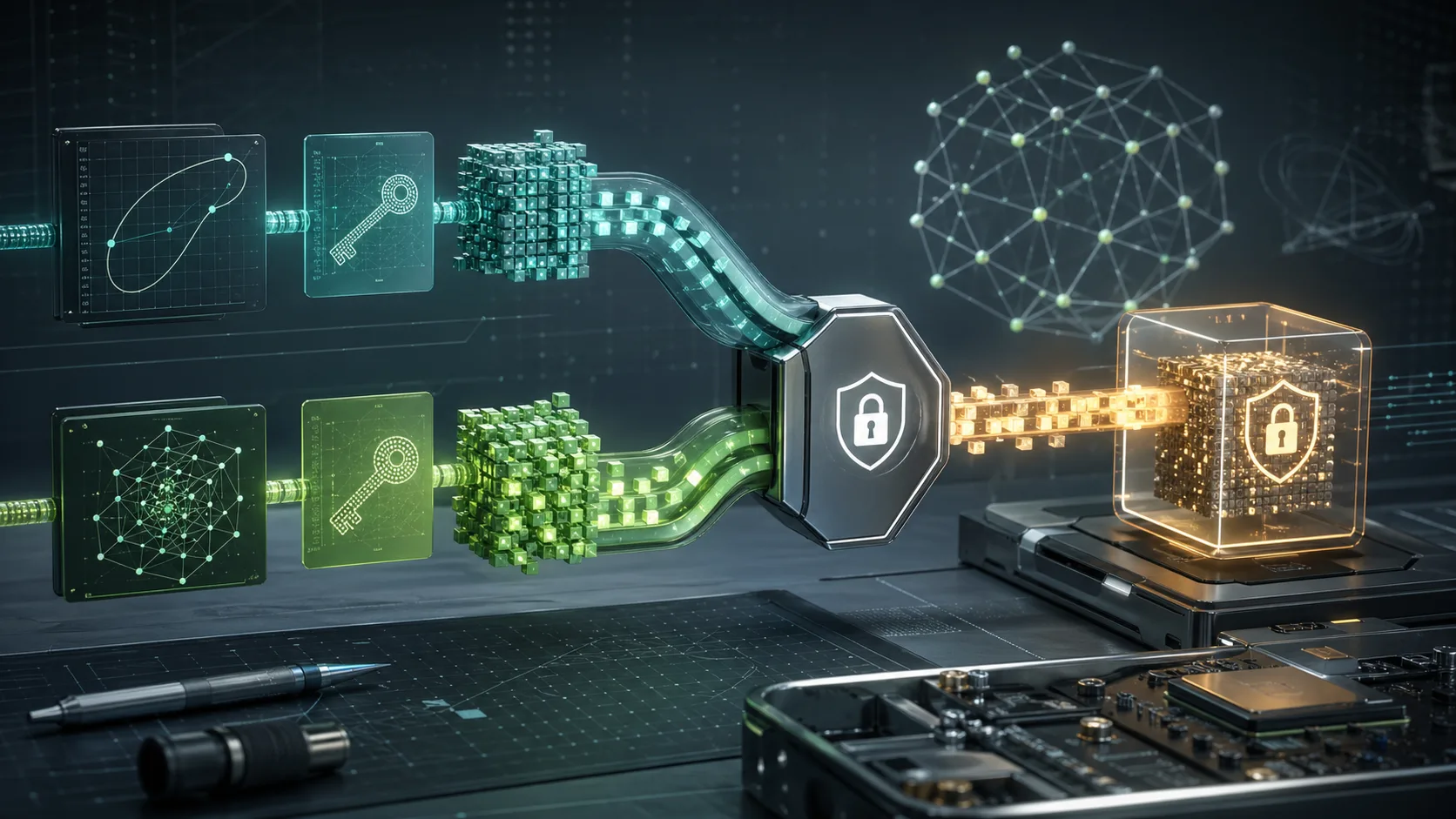
GnuPG was already used to encrypt and sign. The novelty is that the 2.5 series incorporates Kyber, today also called ML-KEM, as part of its post-quantum encryption support. ML-KEM does not encrypt the entire file like a symmetric algorithm would; Its role is to help two parties agree on a secret key securely. That key is then used to protect the actual content.
In practice, this is less like changing a home’s entire electrical system and more like changing the mechanism that allows the key to be safely handed over. The house may still have familiar doors, windows, and routines, but key sharing is reinforced to resist future attacks. That transition is easier to accept when tools try to maintain backward compatibility.
GnuPG’s announcement insists that new versions are compatible with previous ones. That point is important because privacy doesn’t hold up if it only works for those who update on the first day. In the real world there are colleagues with old versions, servers that are slow to update, forgotten automations, and people who just want to send a file without learning a complete architecture.
The risk of saving today to decrypt tomorrow
The threat that makes this topic urgent does not need a quantum computer available today. Simply have someone capture encrypted traffic, protected emails, backups or stolen files and save them. If enough capacity appears years from now to break the old public key scheme, that old data could then be read. For short-lived information, it may not matter. For information that must remain private for a decade, it does matter.
The right question is not whether a quantum machine capable of breaking cryptography is just around the corner. The useful question is how long the secret should live. If the secret must last five, ten or twenty years, the migration begins before the threat becomes daily. That logic explains why banks, states, hospitals, universities and companies with intellectual property should pay attention now.
It also explains why the sensible reaction is not to delete everything or buy products with flashy labels. The first step is to know where there is encrypted information, who can read it, how long it is kept and what tools are used. In many homes and small businesses, GnuPG appears indirectly: when verifying software, receiving backups, signing packages, or protecting shared files.
What it means to a normal person
For most people, this news does not mean changing habits this afternoon. It does mean understanding that security software needs maintenance. If you use GnuPG directly, it is advisable to follow the stable versions, verify downloads and not depend indefinitely on a branch that is entering end of life. If you use an application that incorporates GnuPG underneath, the task is to keep that application up to date.
Everyday privacy is a lot like health: it is not solved by heroic action, but by reasonable routines. Updating systems, using password managers, enabling multi-factor authentication, encrypting backups, verifying signatures, and being wary of dubious installers is still more important than obsessing over words like quantum. Post-quantum cryptography adds a layer of the future, but it does not replace basic hygiene.
There is an important nuance: post-quantum does not mean invulnerable. It means designed to resist known quantum attacks that threaten classical public key systems. Human error, infected computers, weak passwords, exposed private keys, and negligent vendors remain very real problems. A modern algorithm does not compensate for sloppy operation.
Why the hybrid approach is reassuring
An idea repeated in the technical discussion is the value of combining classical cryptography with post-quantum cryptography. Instead of going all-in on a new algorithm, many systems use hybrid constructions: if the post-quantum algorithm has an unexpected weakness, the classical part still provides protection; If a quantum computer appears capable of breaking the classical part, the post-quantum part maintains the defense.
For a non-technical person, the analogy is simple: it is not putting two identical locks, but two locks based on different principles. If tomorrow a lock is discovered for one, the other does not necessarily fall at the same time. That redundancy has costs, such as slightly larger messages and more compatibility testing, but for files and emails those costs are usually acceptable.
The conversation also reminds that the transition can be slow for physical reasons. Smartcards, hardware tokens, and HSMs cannot always learn new algorithms with a software update. Some devices will have to wait for firmware, others will need replacement, and others will remain as support for old keys. That’s all the more reason to start with inventories, not promises.
What should you do now
If you are an individual user, keep your tools up to date and avoid relying on unsupported versions. If you run a small business, ask what encrypted data should remain confidential for years. If you buy software, start asking about the post-quantum roadmap, not to demand a perfect answer today, but to distinguish vendors who are thinking about the problem from those who will only react late.
If you handle sensitive information, check your backups. Many future leaks will not come from messages intercepted in transit, but from files copied from compromised systems. An encrypted backup with current best practices is better than one without encryption; a backup with future-proof mechanisms will be better even if the retention period is long.
It is also convenient to separate confidentiality from authenticity. GnuPG is used to encrypt and sign. ML-KEM is related to establishing secrets for encryption; Post-quantum signatures go their own way, with standards like ML-DSA and SLH-DSA. In other words, protecting that no one reads content and proving who signed it are different objectives, although both live under the umbrella of cryptography.
A small piece of news with a cultural effect
The most interesting thing about GnuPG 2.5.19 is that it normalizes a transition that for years sounded distant. Quantum computing stops being just a headline threat and becomes a concrete pressure on versions, packages, compatibility and updating habits. That’s good: societies are better prepared when changes come in known tools and not as miracle products.
Privacy does not depend only on governments or large companies. It also depends on free software maintained by communities, on publicly reviewed standards, on users who verify signatures, and on administrators who update judiciously. GnuPG is part of that discrete infrastructure. Moving towards post-quantum cryptography does not solve everything, but it marks a clear direction.
The practical conclusion is calm: there is no need to panic, but it is also not advisable to wait until the problem is urgent. If your secrets are short-lived, the risk is lower. If your secrets live long, the post-quantum transition is already part of your privacy calendar. And if you don’t know how long your secrets live, that’s the first question worth answering.
Sources consulted
- GnuPG 2.5.19 official announcement: https://lists.gnupg.org/pipermail/gnupg-announce/2026q2/000504.html
- Community discussion on Hacker News: https://news.ycombinator.com/item?id=47907018
- NIST, FIPS 203, FIPS 204 and FIPS 205 approved: https://csrc.nist.gov/News/2024/postquantum-cryptography-fips-approved
- Chilean Law 21,663, Cybersecurity Framework Law: https://www.diariooficial.interior.gob.cl/publicaciones/2024/04/08/43820/01/2475674.pdf
You might also like
GnuPG 2.5.19 and ML-KEM: technical guide to prepare for post-quantum OpenPGP
Technical analysis of GnuPG 2.5.19, ML-KEM/Kyber, OpenPGP compatibility, migration from 2.4 and practical risks for security teams.
April 26, 2026

Post-quantum cryptography in Chile: impact for companies, the State and digital providers
How post-quantum cryptography affects the Chilean ecosystem: Cybersecurity Framework Law, essential services, suppliers, banking, health and local software.
April 26, 2026
Dirty Frag in Linux: technical guide to page cache, skb fragments and local root
Technical Dirty Frag analysis: page cache, skb fragments, ESP/RxRPC, copy boundaries and mitigation priorities.
May 7, 2026